
 English
 Español
 日本語
日本語 Français
 Deutsch
 Tiếng Việt
 العربية
 Portugues
 lingua italiana
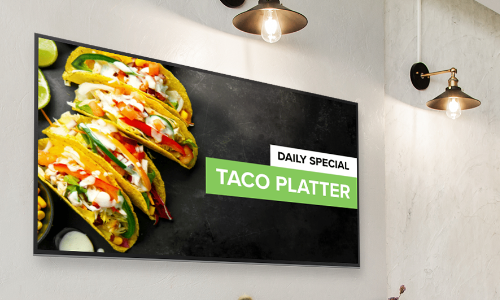
As the restaurant landscape undergoes ongoing transformations, an increasing number of establishments are opting for digital menu boards. Similar to any technological advancement, digital menu boards entail distinct advantages and disadvantages.
What are Digital Signage Menu Boards?
Digital signage menu boards are a type of display system used in restaurants, cafes, fast food chains, and other food service establishments to showcase menus, promotions, and other relevant information in a dynamic and visually appealing way. Instead of traditional static menus, these boards use digital screens to present content such as food items, prices, images, videos, and promotions.

How do Digital Signage Menu Boards Work?
Digital menu screens work by utilizing a combination of hardware and software components to create and display dynamic content.
Hardware Components:
Digital Displays: These are the screens or monitors that present the digital content. They can range from simple LCD or LED screens to more advanced interactive touchscreens.
Media Players: These are devices that connect to the digital displays and play the content. Media players can be built into the display itself or exist as separate devices. They are responsible for decoding and rendering multimedia content.
Content Management Server: In many cases, there's a central server or cloud based platform where the content is created, managed, and scheduled. This server communicates with the media players to push content updates.
Content Creation and Management:
Content Creation Software: Businesses use specialized software to create the content for their digital signage. This may include designing layouts, adding images, videos, and text, and setting up transitions or animations.
Menu Templates: Many digital signage solutions offer pre designed templates for menus, making it easy for businesses to create visually appealing displays.
Content Distribution:
Content Scheduling: Businesses can schedule when specific content will be displayed. For example, breakfast items may be featured in the morning, and lunch specials in the afternoon.
Remote Management: Content can be managed remotely, allowing businesses to update menus, prices, and promotions across multiple locations simultaneously.
Integration with POS Systems:
POS Integration: Some digital signage systems can integrate with Point of Sale (POS) systems. This ensures that the information displayed on the menu boards is always up to date with the current inventory and pricing in the business.
Connectivity:
Network Connection: Digital signage systems typically require a network connection for communication between the content management server and the media players. This can be achieved through wired or wireless connections.
Interactive Features (Optional):
Touchscreen Technology: In some cases, digital signage menu boards may include interactive features, such as touchscreens, enabling customers to interact with the menu, customize their orders, or access additional information.
Monitoring and Analytics:
Monitoring: Some digital signage systems provide monitoring capabilities, allowing businesses to track the status of their displays, detect potential issues, and ensure smooth operation.
Analytics: Businesses may also use analytics tools to gather data on the effectiveness of their digital signage, such as which content is most popular and how often specific items are selected.
The Pros and Cons of Digital Signage Menu Boards
Pros:
Although there may be an initial investment associated with implementing digital indoor menu boards, they often result in significant long term cost savings by eliminating the necessity for printed menus. The capacity to make real time changes eliminates the recurring expense of reprinting menus whenever updates to offerings are made. It's noteworthy that many restaurants experience tangible value from digital menu boards almost immediately after their adoption.
Digital menu boards enhance the customer experience by presenting captivating visuals, showcasing specials, and delivering a more personalized touch. The real time updating feature ensures that your menu remains current and pertinent. Our observations indicate that restaurant operators who adeptly manage content scheduling achieve optimal results. Shifting from traditional "day parts" thinking, successful operators now consider content updates on a "moment to moment" basis.
Digital menu boards offer an aesthetically pleasing platform to present your menu. Leveraging high quality images and animations, these boards have the power to entice customers to explore new items and accentuate your most beloved dishes.
Digital menu boards offer effortless updates and centralized management. The real time editing capability allows for swift responses to alterations in inventory or menu options. Specifically designed with user friendliness in mind, platforms like SmarterSign empower individuals to take full control of their digital signage, typically requiring only a few minutes to grasp common modifications.
A significant advantage lies in the adaptability of restaurant menu display screen to swiftly accommodate shifts in the business landscape. Whether adjusting prices, introducing new items, or promoting special offers, these boards facilitate real time changes, allowing businesses to maintain agility and responsiveness to market demands. This ensures that your menu consistently reflects the latest offerings, providing customers with an up to date and engaging experience.
Cons
The initial investment associated with digital menu boards can pose a significant financial burden, particularly for smaller restaurants. Furthermore, addressing any technical issues that may arise could entail expensive repairs or maintenance. It is noteworthy, however, that the cost of digital menu boards has witnessed a substantial decline in recent years, especially with the increased affordability of screen technology.
While digital menu boards can elevate the dining experience for many customers, there exists a perception among some that they may lack a personal touch or seem impersonal. The absence of a physical menu might make certain individuals feel a disconnection from the traditional dining experience they are accustomed to. Nevertheless, as digital menu boards become more ubiquitous, customers are increasingly embracing and becoming more comfortable with this technology as an integral part of the dining landscape.
Excessively intricate or distracting visuals have the potential to divert attention away from the actual food being served.
Technical glitches with digital menu boards can lead to frustration for both customers and staff. Moreover, training staff on the utilization and management of digital menu boards may demand additional time and resources.
While the ability to make quick changes is an advantage of digital menu boards, the process of updating and managing them can become time consuming if not efficiently streamlined. This is especially true if the software employed is not user friendly or designed for ease of use by the average person.
As the technology continues to evolve, restaurant menu display screen is poised to play an increasingly integral role in shaping the future of navigation in both public and private spaces. If you have any request, please contact EKAA!!!


