
 English
 Español
 日本語
日本語 Français
 Deutsch
 Tiếng Việt
 العربية
 Portugues
 lingua italiana
Summary: Cooling design directly affects outdoor display reliability, maintenance cost, and long-term uptime. This guide helps buyers decide when fanless outdoor digital signage is the better choice and when fan-cooled systems may still be acceptable.
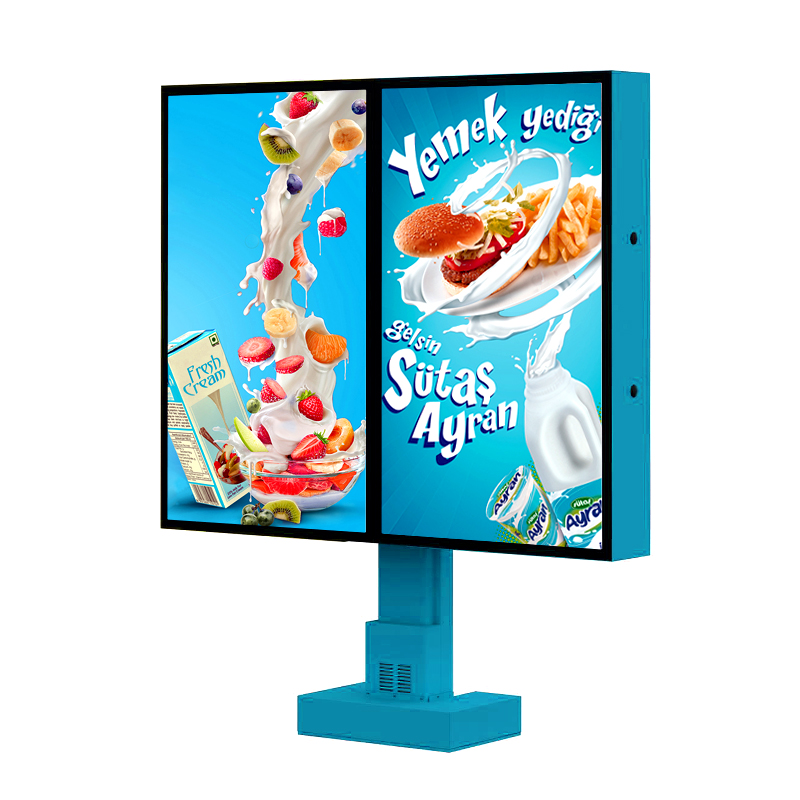
EKAA IP67 fanless outdoor digital signage used for drive-thru and harsh outdoor installations.
Outdoor digital signage must survive heat, sunlight, dust, rain, and long operating hours. For procurement teams, one of the most important technical questions is also one of the easiest to overlook: how is the display cooled?
Most outdoor LCD displays use either a fanless cooling design or a fan-cooled design. Both can move heat away from the panel and electronics, but they create very different maintenance and reliability profiles after installation.
This article explains the difference and gives buyers a practical way to evaluate which option is better for their project.
What Is Fan-Cooled Outdoor Digital Signage?
Fan-cooled outdoor signage uses mechanical fans to move air through or around the display enclosure. The goal is to remove heat generated by the LCD panel, backlight, media player, power supply, and sunlight exposure.
Fan cooling can be effective, especially in lower-cost or less demanding outdoor applications. However, fans introduce moving parts. They may pull dust into the cabinet, require filters, create noise, and eventually wear out.
For procurement, the key issue is not whether fans can cool a display. The question is whether the maintenance burden is acceptable over the full service life.
What Is Fanless Outdoor Digital Signage?
Fanless outdoor digital signage uses passive thermal design instead of mechanical airflow. Heat is managed through enclosure structure, heat conduction, internal airflow channels, thermal materials, and careful component placement.
Because there are no cooling fans, fanless designs reduce moving parts and can lower dust intake risk. This is especially valuable for high-brightness outdoor LCD displays installed in dusty, humid, coastal, or hard-to-service locations.
Fanless does not mean "no heat." It means the heat is controlled through mechanical and thermal engineering rather than replaceable fan assemblies.
Fanless vs Fan-Cooled: Procurement Comparison
| Evaluation Point | Fanless Outdoor Signage | Fan-Cooled Outdoor Signage |
|---|---|---|
| Moving parts | Fewer moving parts | Fans can wear out |
| Dust intake | Lower risk when sealed properly | Higher risk if air is pulled through filters or vents |
| Maintenance | Usually lower routine maintenance | Filter cleaning and fan inspection may be required |
| Noise | Typically quieter | Fan noise may matter in customer-facing areas |
| Waterproof design | Easier to support sealed enclosure design | Venting and airflow paths must be protected carefully |
| Initial cost | May be higher | May be lower |
| Lifecycle cost | Often lower for harsh or remote sites | Can rise with maintenance visits and part replacement |
| Best fit | Harsh outdoor, 24/7, dusty, humid, high-uptime projects | Budget-sensitive or easily serviced locations |
Why Fans Become a Procurement Risk
Fans are small components, but they can create large project costs.
Procurement teams should consider:
- A failed fan can increase internal temperature and shorten component life.
- Dust-clogged filters reduce cooling performance.
- Maintenance visits cost labor, travel, equipment access, and downtime.
- Vented designs must still prevent water ingress.
- Replacement fan availability matters years after installation.
For a single display installed at an easily accessible site, this may be manageable. For a fleet of outdoor menu boards, transit screens, advertising displays, or smart city kiosks, repeated maintenance can become expensive.
When Fanless Is Usually the Better Choice
Fanless outdoor digital signage is often preferred when:
- The display runs 24/7.
- The site is exposed to dust, sand, humidity, rain, or salt air.
- Maintenance access is difficult or expensive.
- The display must meet high waterproof and dustproof requirements.
- The buyer wants lower long-term maintenance.
- The project uses high-brightness screens such as 2,500-nit or 4,000-nit outdoor LCD displays.
- Downtime affects revenue, customer service, or public information delivery.
For QSR drive-thru menu boards, gas stations, transportation hubs, outdoor advertising, and public wayfinding, fanless design can reduce service risk and improve long-term uptime.
EKAA uses fanless thermal architecture across its professional IP67 outdoor display range, including outdoor digital signage and QSR drive-thru menu boards for exposed commercial environments.
When Fan-Cooled Systems May Still Be Acceptable
Fan-cooled systems are not automatically wrong. They may be acceptable when:
- The site is sheltered.
- Maintenance access is easy.
- The environment is not dusty or humid.
- The display is not required to run continuously.
- The buyer has a local service team.
- The warranty and spare-parts plan are clear.
- The lower upfront price is more important than maintenance reduction.
The mistake is not buying a fan-cooled product. The mistake is buying one without understanding the future maintenance plan.
Questions Buyers Should Ask Suppliers
Before choosing any outdoor display, ask:
- Is the cooling system fanless or fan-cooled?
- What is the operating temperature range at full brightness?
- Has the finished product been tested under high-temperature operation?
- If fans are used, what is the expected fan life?
- Are filters required, and how often must they be cleaned?
- Does the IP rating apply to the complete finished product?
- What happens if the fan fails?
- Can the supplier provide thermal design evidence?
- Are replacement cooling parts available for at least 7 years?
- Does the warranty cover failures caused by water, dust, or cooling malfunction?
Procurement Takeaway
For outdoor digital signage, cooling is not a small technical detail. It affects waterproof design, dust control, maintenance cost, uptime, and total cost of ownership.
Fanless outdoor digital signage is usually the stronger choice for harsh environments, high-brightness displays, 24/7 operation, and projects where maintenance visits are expensive. Fan-cooled displays may still work in easier environments, but buyers must include filter cleaning, fan replacement, and service access in the cost calculation.
The best procurement decision is not simply "fanless is better" or "fan cooling is cheaper." The right decision is the cooling design that keeps the display readable, stable, and serviceable for the full project life.
Related EKAA Resources
For sealed outdoor display projects, review EKAA Fanless Outdoor Digital Signage and IP67 Outdoor Digital Signage guidance, compare the full Outdoor Digital Signage range, and explore QSR Drive-Thru Menu Boards, Outdoor Wall Mounted Displays, Outdoor Floor Standing Displays, and real-world EKAA Case Studies.


