
 English
 Español
 日本語
日本語 Français
 Deutsch
 Tiếng Việt
 العربية
 Portugues
 lingua italiana
As a business proprietor, enhancing operational efficiency and elevating customer service remain top objectives. One straightforward method to optimize payment processing is by offering patrons self service payment alternatives. Implementing self service technologies like kiosks, EMV chip card readers, or online payment portals enables merchants to conveniently present their products or services directly to consumers, wherever they are in their daily routines.
Contactless technology has rapidly become omnipresent in recent years, particularly in industries such as restaurants where it's transitioning from a luxury to a necessity. Consumers increasingly demand swift and secure methods for ordering and payment, often favoring convenience over traditional customer service approaches.
Self ordering kiosk emerges as a convenient and versatile solution, offering myriad advantages. Easily integrated into compact spaces without disrupting the customer experience, restaurant kiosk ordering allows for swift menu updates as items fluctuate in availability. Furthermore, these kiosks are dependable, liberating staff to attend to other duties, and can drive profitability through upselling and recommendations.
Moreover, there's widespread consumer embrace of this technology. With the surge in contactless shopping, self service payment kiosks have swiftly become ingrained in consumer routines, shaping a new normal in retail experiences.
A Solution To Shortages
The restaurant sector still grapples with a workforce deficit of approximately half a million employees compared to pre pandemic levels. Shortages in staffing have frequently compelled operators to curtail operating hours, leading to lengthy queues and customer dissatisfaction. These delays not only disrupt sales but also result in nearly 75% of shoppers occasionally abandoning physical lines before their turn.
Self checkout kiosk offers a solution to labor shortages by empowering customers to manage their orders independently. With the ability to peruse menu items, select their preferences, and complete payments at their own pace, customers no longer require assistance from sales associates, thus mitigating the impact of staff shortages on service efficiency.
What Is A Restaurant Self Service Kiosk?
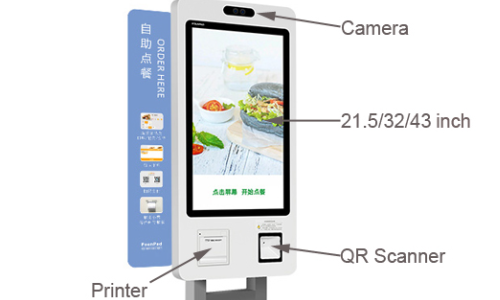
A self service kiosk for restaurants constitutes an interactive touchscreen device enabling customers to purchase goods or services autonomously, without assistance from staff members. It encompasses both hardware and software elements facilitating customers to browse items, place orders, and complete transactions independently.
The hardware aspect comprises a screen device securely affixed to surfaces like walls, countertops, or freestanding pedestals. Meanwhile, the software component encompasses a kiosk application that enables customization of an ordering workflow tailored to the specific requirements of the business. A typical example of a self service kiosk is a mounted point of sale (POS) system, granting customers the ability to check out autonomously within a store or restaurant environment.
How A Restaurant Self Service Kiosk Can Help Your Business
Improve Space Management.
Implementing a restaurant self ordering kiosk presents an opportunity to reclaim valuable counter space. The Square Stand Mount offers versatile installation options, allowing it to be securely affixed to walls, counters, or standing pedestals. This flexibility enables you to tailor the device placement to suit your space requirements without necessitating significant structural alterations to your store or restaurant layout.
Reduce Staffing Requirements.
Customers can autonomously complete orders with minimal or no staff intervention through self service kiosks, thereby liberating staff members to attend to other essential tasks, a particularly valuable asset for businesses grappling with staffing shortages. As per reports, up to 70% of restaurants are currently contending with a labor deficit.
Deliver A Better Customer Experience.
In self serve mode, customers wield full control over their orders, facilitating swift item selection and expedited checkout processes. Consequently, there are fewer instances of order inaccuracies and reduced wait times, ultimately enhancing the overall customer experience.
Increase Your Revenue.
Self service kiosks afford customers a sense of anonymity, empowering them to place orders for additional items or make special requests without concerns of judgment. Research indicates that the market share for challenging to pronounce items surged by 8.4% through self service channels.
Additionally, self service kiosks provide a platform for strategic upselling and incentivizing customers in a meticulously crafted manner. A study conducted at McDonald's revealed that customers were more inclined to accept upsell offers presented via self service kiosks compared to those made during in person interactions.
Receive Better Customer Insight.
Customer interactions on self service kiosks can be meticulously tracked, furnishing businesses with invaluable insights into customer behaviors and preferences. This data empowers businesses to deliver more personalized experiences tailored to individual customer needs.
Easy Integration
Kiosks present as compact self service alternatives seamlessly adaptable to Quick Service Restaurants (QSRs) and convenience stores (c stores) without causing disruption. They provide versatile installation options—standing, wall mounted, and countertop—coupled with a sleek, contemporary design, making them compatible with the majority of store configurations and layouts. Moreover, kiosks can be remotely managed, enabling QSRs and c stores to address and rectify any issues from a distance, as long as they have an internet connection available.
How To Set Up A Restaurant Self Service Kiosk For Your Business
Analyze Your Business Needs.
When contemplating the viability of investing in a self service kiosk for your business, it's crucial to carefully assess its purpose and intended utilization. For instance, a bustling quick service restaurant might prioritize accelerating customer service and maximizing space efficiency. In contrast, a full service restaurant might seek a streamlined solution for servers to input orders seamlessly without overcrowding the kitchen or counters.
Understanding the specific needs and objectives of your business will guide you in determining whether a self service kiosk aligns with your operational goals. Consider factors such as customer flow, space constraints, and the desired level of automation in order processing. By evaluating how a self service kiosk fits into your overall business strategy, you can make an informed decision regarding its suitability as an investment.
Choose The Right Device.
Once you've determined the purpose of your self service kiosk, the subsequent step involves selecting a suitable device. Ease of use should be a paramount consideration. Opting for a device that is intuitive for customers to navigate without extensive explanation is essential. Complicated interfaces or lengthy setup processes can detract from the intended efficiency and convenience of a self service kiosk.
Additionally, it's crucial to align the specifications of the device with your specific requirements. If maximizing counter space is a priority, exploring compact device options is advisable. These smaller devices can be conveniently mounted on various surfaces such as walls, flat surfaces, or standing pedestals. Furthermore, ensure that the chosen device seamlessly integrates with your point of sale (POS) system and supports multiple kiosk applications, facilitating smooth and efficient transactions.
Set Up Your Kiosk.
Selecting an optimal location within your store or restaurant is crucial when installing a self service kiosk. Depending on the chosen device, you might not require a technician for installation. For instance, the Square Stand Mount comes with all necessary mounting hardware included in the package, eliminating the need for service visits. Moreover, should you decide to relocate the kiosk, it can be easily uninstalled and moved to another location, providing flexibility in adjusting your setup to best suit your evolving business needs.
Promote Your Kiosk.
The effectiveness of your self service kiosk relies heavily on customer adoption. To ensure its utilization, it's essential to actively inform customers about the kiosk and employ strategies to encourage its use.
In store signage serves as an effective tool for introducing customers to the kiosk and providing straightforward instructions on its usage. Clear and visible signage can draw attention to the kiosk and guide customers through the ordering process.
Additionally, incentivizing customers to use the kiosk can further boost adoption rates. One way to achieve this is by offering a discount on orders placed via the self service kiosk. This incentive not only encourages customers to try out the kiosk but also rewards them for choosing this convenient option.
By implementing these strategies, you can increase awareness of your self serve kiosk and incentivize customers to utilize this efficient and convenient ordering method.
The technology continues to evolve, self service payment kiosk is poised to play an increasingly integral role in shaping the future of navigation for business. For further information about, please contact EKAA!!!


