
 English
 Español
 日本語
日本語 Français
 Deutsch
 Tiếng Việt
 العربية
 Portugues
 lingua italiana
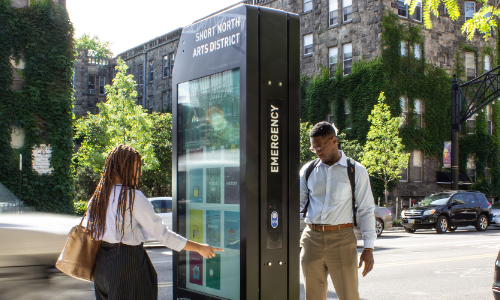
Smart city kiosk technology is gaining increasing attention and momentum as more urban areas become part of the smart cities movement. These innovative kiosk screens are becoming ubiquitous in city plazas, government buildings, bus stops, and sidewalks, delivering timely and location specific information to citizens. The surge in their presence raises questions about the nature of smart kiosks and the advantages they bring to cities and their residents.
Introduction of Smart City Kiosk
A smart kiosk refers to an interactive display commonly positioned in public areas, designed to offer users, visitors, or passersby vital information and services. This outdoor digital signage is a technologically advanced information and communication hub strategically deployed in urban areas as part of smart city initiatives. These kiosks are equipped with digital screens, interactive interfaces, and connectivity features to provide a range of services and information to residents and visitors.
These kiosks typically offer real time information on local events, public transportation schedules, weather updates, maps, emergency alerts, and other relevant data. They may also provide interactive services, such as WiFi connectivity, wayfinding assistance, and access to city services or applications.
The primary goal of smart city kiosks is to enhance urban living by leveraging technology to improve communication, accessibility, and the overall efficiency of city services. Through these kiosks, cities aim to create more connected and informed communities while contributing to the broader concept of building smarter, more sustainable urban environments.

What is a Smart City Kiosk Designed to do?
A smart city kiosk is crafted to offer citizens, visitors, or those passing by convenient access to information and urban services. Typically featuring an interactive outdoor digital display screen, a smart kiosk enables users to effortlessly search and obtain the necessary information.
What is a Smart City Kiosk’s Range of Functions?
The primary purpose of a digital self service kiosk is to empower customers to independently accomplish a variety of common tasks without the intervention of a dedicated employee. This spans activities.
Wayfinding – assisting users in navigating city streets and locating destinations.
Transportation – furnishing schedules and real time status updates for buses, subways, trains, and other public transportation modes.
Listings – delivering information about nearby businesses and restaurants, including reviews.
Events – offering details about entertainment and community events open to the public.
Payment – facilitating transactions for parking fees or city bills.
Information – dispensing news, weather updates, and other public interest information.
Emergency services – allowing users to contact emergency services, including live assistance when necessary.
Alerts – providing the public with severe weather warnings, Amber alerts, and street closure information.
WiFi – functioning as a free WiFi hotspot for users.
Charging stations – supplying access to power for charging mobile devices.
Regardless of the specific function, the overarching aim is to enhance user autonomy and operational efficiency. Although the implementation of self service kiosks involves an initial capital investment, they provide companies with the opportunity to automate routine processes, thereby minimizing the necessity for additional manpower.
Types of Kiosks
Kiosks exhibit diversity depending on the type of business and whether the proprietor opts for an electronic setup or staffs it with individuals. The choice of location is typically influenced by the kiosk's nature. For instance, a local newspaper might establish a kiosk at a grocery store to facilitate the enrollment of new subscribers. Likewise, credit card companies frequently install kiosks in airports to attract potential customers for credit cards that offer benefits such as frequent flyer miles.
Employment Kiosks
Apart from kiosks dedicated to retail products or services, certain companies establish employment kiosks where prospective job seekers can submit their job applications. This type of kiosk is particularly prevalent in chain stores like Walmart. Employment kiosks offer a streamlined method for swiftly identifying promising candidates, often leading to immediate on the spot interviews.
Typically, the kiosk comprises a computer station where applicants can utilize a keyboard or touchscreen to input their employment history, education details, and personal information. Some employment kiosks also administer assessment tests to evaluate an applicant's strengths and weaknesses. The information gathered at the kiosk is usually promptly accessible to the hiring manager.
Food Service Kiosks
To enhance the efficiency of food ordering, certain restaurants incorporate self-service kiosks into their operations. Customers can navigate through interactive prompts to choose their meals and tailor their orders. These kiosks typically accommodate credit or debit card payments, eliminating the requirement for a human cashier. The integration of kiosks in restaurants results in decreased reliance on counter personnel, leading to reduced payroll costs for the company.
Healthcare Kiosks
The healthcare sector is increasingly adopting kiosks as a means to facilitate bill payments, streamline patient check-ins for appointments, and maintain patient records. At certain kiosks, patients have the option to independently measure their blood pressure or conduct other non-invasive tests, subsequently sharing the results with their physicians. Some medical kiosks also provide educational videos regarding medical conditions and their respective treatments.
Patient kiosks contribute to cost reduction in healthcare by minimizing paperwork and obviating the need for certain clerical staff positions. However, critics of medical kiosks often express concerns about patient confidentiality in their reservations about their usage.
Bitcoin Kiosks
A Bitcoin kiosk, commonly referred to as a Bitcoin ATM, is an internet-connected kiosk enabling individuals to buy Bitcoins and other cryptocurrencies using cash deposits. Users can initiate a blockchain-based transaction through the kiosk, directing the purchased cryptocurrency to their digital wallet. It's important to note that Bitcoin kiosks differ from traditional ATMs, as they do not facilitate the withdrawal or deposit of cash. Instead, they serve as internet-connected interfaces for purchasing cryptocurrencies.
Photo Kiosks
While not as prevalent as in the past, photo kiosks enjoyed popularity in shopping centers during the 1980s and 1990s. For a nominal fee, individuals had the opportunity to pose in front of a camera lens, which would capture three to four photographs. Customers would then wait a short duration as the kiosk processed and dispensed the developed photos. Additionally, automatic photo kiosks serve another function, enabling individuals to independently develop and print their photographs from DVDs, portable hard drives, and memory sticks.
As the technology continues to evolve, outdoor smart city kiosk is poised to play an increasingly integral role in shaping the future of navigation in both public and private spaces. If you have any request, please contact EKAA!!!


