
 English
 Español
 日本語
日本語 Français
 Deutsch
 Tiếng Việt
 العربية
 Portugues
 lingua italiana
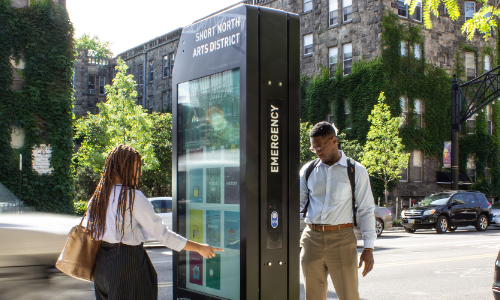
Quiosque de cidade inteligentea tecnologia está ganhando cada vez mais atenção e impulso à medida que mais áreas urbanas se tornam parte do movimento das cidades inteligentes. Essas telas inovadoras de quiosque estão se tornando onipresentes nas praças das cidades, prédios governamentais, pontos de ônibus e calçadas, fornecendo informações oportunas e específicas do local aos cidadãos. O aumento da sua presença levanta questões sobre a natureza dos quiosques inteligentes e as vantagens que trazem para as cidades e para os seus residentes.
Introdução do Smart Cquiosque da cidade
UMquiosque inteligenterefere-se a um display interativo comumente posicionado em áreas públicas, projetado para oferecer aos usuários, visitantes ou transeuntes informações e serviços vitais. Essea sinalização digital externa é um centro de informação e comunicação tecnologicamente avançado estrategicamente implantado em áreas urbanas como parte de iniciativas de cidades inteligentes. Esses quiosques são equipados com telas digitais, interfaces interativas e recursos de conectividade para fornecer uma gama de serviços e informações aos moradores e visitantes.
Esses quiosques normalmente oferecem informações em tempo real sobre eventos locais, horários de transporte público, atualizações meteorológicas, mapas, alertas de emergência e outros dados relevantes. Eles também podem fornecer serviços interativos, como conectividade WiFi, assistência de orientação e acesso a serviços ou aplicativos da cidade.
O principal objetivo dos quiosques de cidades inteligentes é melhorar a vida urbana, aproveitando a tecnologia para melhorar a comunicação, a acessibilidade e a eficiência geral dos serviços urbanos. Através destes quiosques, as cidades pretendem criar comunidades mais conectadas e informadas, ao mesmo tempo que contribuem para o conceito mais amplo de construção de ambientes urbanos mais inteligentes e sustentáveis.

O que é um inteligenteCidade Kiosk Projetado para fazer?
Um quiosque de cidade inteligente é criado para oferecer aos cidadãos, visitantes ou pessoas que passam por ali acesso conveniente a informações e serviços urbanos. Normalmente apresentando uma tela digital interativa externa, um quiosque inteligente permite que os usuários pesquisem e obtenham facilmente as informações necessárias.
O que é um inteligenteCidade KiOS'sRvariedade de funções?
O objetivo principal de umeu digital quiosque de serviçoé capacitar os clientes a realizar de forma independente uma variedade de tarefas comuns, sem a intervenção de um funcionário dedicado. Isso abrange atividades.
Orientação– auxiliando os usuários na navegação pelas ruas da cidade e na localização de destinos.
Transporte– fornecimento de horários e atualizações de status em tempo real para ônibus, metrô, trens e outros modos de transporte público.
Listagens– entrega de informações sobre empresas e restaurantes próximos, incluindo avaliações.
Eventos– oferecendo detalhes sobre entretenimento e eventos comunitários abertos ao público.
Pagamento– facilitar transações de taxas de estacionamento ou contas municipais.
Informação– distribuição de notícias, atualizações meteorológicas e outras informações de interesse público.
Serviços de emergência – permitindo que os usuários entrem em contato com serviços de emergência, incluindo assistência ao vivo quando necessário.
Alertas– fornecer ao público avisos de mau tempo, alertas Amber e informações sobre fechamento de ruas.
Wi-fi– funcionando como um hotspot WiFi gratuito para os usuários.
Estações de carregamento– fornecer acesso à energia para carregar dispositivos móveis.
Independentemente da função específica, o objetivo geral é aumentar a autonomia do utilizador e a eficiência operacional. Embora a implementação de si mesmo Os quiosques de serviço envolvem um investimento inicial de capital, proporcionam às empresas a oportunidade de automatizar processos de rotina, minimizando assim a necessidade de mão de obra adicional.
Tipos de quiosques
Os quiosques apresentam diversidade dependendo do tipo de negócio e se o proprietário opta por uma configuração eletrônica ou se trabalha com pessoas físicas. A escolha do local é normalmente influenciada pela natureza do quiosque. Por exemplo, um jornal local pode estabelecer um quiosque numa mercearia para facilitar o registo de novos assinantes. Da mesma forma, as empresas de cartão de crédito instalam frequentemente quiosques nos aeroportos para atrair potenciais clientes para cartões de crédito que oferecem benefícios como frequência milhas de passageiro.
Quiosques de Emprego
Além dos quiosques dedicados a produtos ou serviços de varejo, certas empresas estabelecem quiosques de emprego onde os possíveis candidatos a emprego podem enviar suas candidaturas. Esse tipo de quiosque é particularmente comum em redes de lojas como o Walmart. Os quiosques de emprego oferecem um método simplificado para identificar rapidamente candidatos promissores, muitas vezes levando a uma resposta imediata o entrevistas pontuais.
Normalmente, o quiosque compreende uma estação de computador onde os candidatos podem utilizar um teclado ou tela sensível ao toque para inserir seu histórico de emprego, detalhes educacionais e informações pessoais. Alguns quiosques de emprego também administram testes de avaliação para avaliar os pontos fortes e fracos do candidato. As informações coletadas no quiosque geralmente ficam prontamente acessíveis ao gerente de contratação.
Quiosques de serviço de alimentação
Para aumentar a eficiência dos pedidos de comida, alguns restaurantes incorporam quiosques de autoatendimento em suas operações. Os clientes podem navegar por prompts interativos para escolher suas refeições e personalizar seus pedidos. Esses quiosques normalmente acomodam pagamentos com cartão de crédito ou débito, eliminando a necessidade de um caixa humano. A integração de quiosques em restaurantes resulta na diminuição da dependência do pessoal de balcão, levando à redução dos custos com folha de pagamento para a empresa.
Quiosques de saúde
O setor da saúde está a adotar cada vez mais quiosques como meio de facilitar o pagamento de contas, agilizar o check-in dos pacientes para consultas e manter os registos dos pacientes. Em determinados quiosques, os pacientes têm a opção de medir de forma independente a pressão arterial ou realizar outros exames não invasivos, compartilhando posteriormente os resultados com seus médicos. Alguns quiosques médicos também oferecem vídeos educativos sobre condições médicas e seus respectivos tratamentos.
Os quiosques para pacientes contribuem para a redução de custos nos cuidados de saúde, minimizando a papelada e eliminando a necessidade de determinados cargos administrativos. No entanto, os críticos dos quiosques médicos muitas vezes expressam preocupações sobre a confidencialidade dos pacientes nas suas reservas sobre a sua utilização.
Quiosques Bitcoin
Um quiosque Bitcoin, comumente referido como ATM Bitcoin, é um quiosque conectado à Internet que permite que indivíduos comprem Bitcoins e outras criptomoedas usando depósitos em dinheiro. Os usuários podem iniciar uma transação baseada em blockchain através do quiosque, direcionando a criptomoeda adquirida para sua carteira digital. É importante ressaltar que os quiosques Bitcoin diferem dos caixas eletrônicos tradicionais, pois não facilitam o saque ou depósito de dinheiro. Em vez disso, servem como interfaces conectadas à Internet para a compra de criptomoedas.
Quiosques de fotos
Embora não sejam tão comuns como no passado, os quiosques fotográficos gozaram de popularidade nos shopping centers durante as décadas de 1980 e 1990. Por uma taxa nominal, os indivíduos tinham a oportunidade de posar diante da lente de uma câmera, que capturaria de três a quatro fotografias. Os clientes esperariam um pouco enquanto o quiosque processava e distribuía as fotos reveladas. Além disso, os quiosques fotográficos automáticos têm outra função, permitindo que os indivíduos revelem e imprimam de forma independente suas fotografias a partir de DVDs, discos rígidos portáteis e cartões de memória.
À medida que a tecnologia continua a evoluir, os quiosques exteriores de cidades inteligentes estão preparados para desempenhar um papel cada vez mais integral na definição do futuro da navegação em espaços públicos e privados. Se você tiver alguma solicitação, entre em contatoEKAA!!!


