
 English
 Español
 日本語
日本語 Français
 Deutsch
 Tiếng Việt
 العربية
 Portugues
 lingua italiana
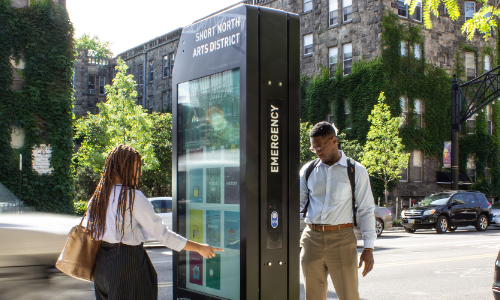
Quiosco de ciudad inteligenteLa tecnología está ganando cada vez más atención e impulso a medida que más áreas urbanas se vuelven parte del movimiento de ciudades inteligentes. Estas innovadoras pantallas de quiosco se están volviendo omnipresentes en las plazas de las ciudades, edificios gubernamentales, paradas de autobús y aceras, brindando a los ciudadanos información oportuna y específica de la ubicación. El aumento de su presencia plantea interrogantes sobre la naturaleza de los quioscos inteligentes y las ventajas que aportan a las ciudades y sus residentes.
Introducción de Smart Cquiosco de la ciudad
Aquiosco inteligenteSe refiere a una pantalla interactiva comúnmente ubicada en áreas públicas, diseñada para ofrecer a los usuarios, visitantes o transeúntes información y servicios vitales. EsteLa señalización digital exterior es un centro de información y comunicación tecnológicamente avanzado desplegado estratégicamente en áreas urbanas como parte de iniciativas de ciudades inteligentes. Estos quioscos están equipados con pantallas digitales, interfaces interactivas y funciones de conectividad para brindar una variedad de servicios e información a residentes y visitantes.
Estos quioscos suelen ofrecer información en tiempo real sobre eventos locales, horarios de transporte público, actualizaciones meteorológicas, mapas, alertas de emergencia y otros datos relevantes. También pueden proporcionar servicios interactivos, como conectividad WiFi, asistencia de orientación y acceso a servicios o aplicaciones de la ciudad.
El objetivo principal de los quioscos de ciudades inteligentes es mejorar la vida urbana aprovechando la tecnología para mejorar la comunicación, la accesibilidad y la eficiencia general de los servicios de la ciudad. A través de estos quioscos, las ciudades pretenden crear comunidades más conectadas e informadas y al mismo tiempo contribuir al concepto más amplio de construir entornos urbanos más inteligentes y sostenibles.

¿Qué es un inteligente?Ciudad Kiosk Diseñado para hacer?
Un quiosco de ciudad inteligente está diseñado para ofrecer a los ciudadanos, visitantes o personas de paso un acceso cómodo a la información y los servicios urbanos. Un quiosco inteligente, que normalmente presenta una pantalla digital interactiva al aire libre, permite a los usuarios buscar y obtener sin esfuerzo la información necesaria.
¿Qué es un inteligente?Ciudad Kiosco'sR¿Ámbito de funciones?
El propósito principal de unyo digital quiosco de servicioes capacitar a los clientes para que realicen de forma independiente una variedad de tareas comunes sin la intervención de un empleado dedicado. Esto abarca actividades.
Orientación– ayudar a los usuarios a navegar por las calles de la ciudad y localizar destinos.
Transporte– proporcionar horarios y actualizaciones de estado en tiempo real para autobuses, metros, trenes y otros modos de transporte público.
Listados– entregar información sobre empresas y restaurantes cercanos, incluidas reseñas.
Eventos– ofreciendo detalles sobre entretenimiento y eventos comunitarios abiertos al público.
Pago– facilitar las transacciones de tarifas de estacionamiento o facturas municipales.
Información– distribución de noticias, actualizaciones meteorológicas y otra información de interés público.
Servicios de emergencia: permite a los usuarios comunicarse con los servicios de emergencia, incluida asistencia en vivo cuando sea necesario.
Alertas– brindar al público advertencias de clima severo, alertas ámbar e información sobre el cierre de calles.
Wi-Fi– Funcionando como un punto de acceso WiFi gratuito para los usuarios.
Estaciones de carga– proporcionar acceso a energía para cargar dispositivos móviles.
Independientemente de la función específica, el objetivo general es mejorar la autonomía del usuario y la eficiencia operativa. Aunque la implementación del auto Los quioscos de servicio implican una inversión de capital inicial, brindan a las empresas la oportunidad de automatizar procesos rutinarios, minimizando así la necesidad de mano de obra adicional.
Tipos de quioscos
Los quioscos presentan diversidad según el tipo de negocio y si el propietario opta por una configuración electrónica o la dota de personal. La elección de la ubicación suele estar influenciada por la naturaleza del quiosco. Por ejemplo, un periódico local podría instalar un quiosco en una tienda de comestibles para facilitar la inscripción de nuevos suscriptores. Asimismo, las compañías de tarjetas de crédito instalan frecuentemente quioscos en los aeropuertos para atraer clientes potenciales de tarjetas de crédito que ofrecen beneficios tales como millas de viajero.
Quioscos de empleo
Además de los quioscos dedicados a la venta minorista de productos o servicios, algunas empresas establecen quioscos de empleo donde los posibles solicitantes de empleo pueden presentar sus solicitudes de empleo. Este tipo de quiosco es especialmente frecuente en cadenas de tiendas como Walmart. Los quioscos de empleo ofrecen un método simplificado para identificar rápidamente candidatos prometedores, lo que a menudo conduce a una contratación inmediata. el entrevistas puntuales.
Por lo general, el quiosco consta de una estación de computadora donde los solicitantes pueden utilizar un teclado o una pantalla táctil para ingresar su historial laboral, detalles educativos e información personal. Algunos quioscos de empleo también administran pruebas de evaluación para evaluar las fortalezas y debilidades del solicitante. El gerente de contratación generalmente puede acceder rápidamente a la información recopilada en el quiosco.
Quioscos de servicio de alimentos
Para mejorar la eficiencia en los pedidos de alimentos, ciertos restaurantes incorporan quioscos de autoservicio en sus operaciones. Los clientes pueden navegar a través de indicaciones interactivas para elegir sus comidas y personalizar sus pedidos. Estos quioscos suelen aceptar pagos con tarjeta de crédito o débito, lo que elimina la necesidad de un cajero humano. La integración de quioscos en los restaurantes da como resultado una menor dependencia del personal de mostrador, lo que lleva a una reducción de los costos de nómina para la empresa.
Quioscos de atención médica
El sector de la salud está adoptando cada vez más quioscos como medio para facilitar el pago de facturas, agilizar el registro de pacientes para citas y mantener registros de pacientes. En ciertos quioscos, los pacientes tienen la opción de medir su presión arterial de forma independiente o realizar otras pruebas no invasivas y luego compartir los resultados con sus médicos. Algunos quioscos médicos también ofrecen videos educativos sobre afecciones médicas y sus respectivos tratamientos.
Los quioscos para pacientes contribuyen a la reducción de costos en la atención médica al minimizar el papeleo y obviar la necesidad de ciertos puestos de personal administrativo. Sin embargo, los críticos de los quioscos médicos a menudo expresan preocupaciones sobre la confidencialidad del paciente en sus reservas sobre su uso.
Quioscos Bitcoin
Un quiosco de Bitcoin, comúnmente conocido como cajero automático de Bitcoin, es un quiosco conectado a Internet que permite a las personas comprar Bitcoins y otras criptomonedas mediante depósitos en efectivo. Los usuarios pueden iniciar una transacción basada en blockchain a través del quiosco, dirigiendo la criptomoneda comprada a su billetera digital. Es importante señalar que los quioscos Bitcoin se diferencian de los cajeros automáticos tradicionales en que no facilitan el retiro o depósito de efectivo. En cambio, sirven como interfaces conectadas a Internet para comprar criptomonedas.
Quioscos de fotos
Si bien no son tan frecuentes como en el pasado, los quioscos fotográficos gozaron de popularidad en los centros comerciales durante las décadas de 1980 y 1990. Por una tarifa nominal, las personas tenían la oportunidad de posar frente a la lente de una cámara, que capturaría de tres a cuatro fotografías. Luego, los clientes esperaban un breve período mientras el quiosco procesaba y distribuía las fotografías reveladas. Además, los quioscos fotográficos automáticos cumplen otra función: permiten a las personas revelar e imprimir de forma independiente sus fotografías desde DVD, discos duros portátiles y tarjetas de memoria.
A medida que la tecnología continúa evolucionando, los quioscos urbanos inteligentes al aire libre están preparados para desempeñar un papel cada vez más integral en la configuración del futuro de la navegación en espacios públicos y privados. Si tiene alguna solicitud, comuníquese conEKAA!!!


