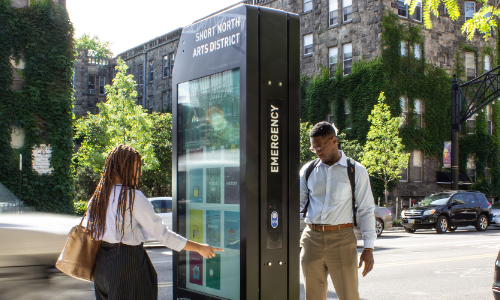
スマートシティキオスクより多くの都市部がスマートシティ運動に参加するにつれて、テクノロジーへの注目と勢いはますます高まっています。これらの革新的なキオスク スクリーンは都市の広場、政府の建物、バス停、歩道に普及しており、場所に応じた情報をタイムリーに市民に提供します。その存在の急増により、スマート キオスクの性質と、スマート キオスクが都市とその住民にもたらす利点について疑問が生じています。
スマートCのご紹介シティキオスク
あスマートキオスク一般に公共エリアに設置され、ユーザー、訪問者、または通行人に重要な情報とサービスを提供するように設計された対話型ディスプレイを指します。これ屋外デジタル サイネージは、スマート シティ イニシアチブの一環として都市部に戦略的に導入された、技術的に進んだ情報通信ハブです。これらのキオスクには、デジタル スクリーン、インタラクティブ インターフェイス、接続機能が装備されており、居住者や訪問者にさまざまなサービスと情報を提供します。
これらのキオスクは通常、地域のイベント、公共交通機関のスケジュール、気象情報、地図、緊急警報、その他の関連データに関するリアルタイム情報を提供します。また、WiFi 接続、道案内支援、市のサービスやアプリケーションへのアクセスなどの対話型サービスも提供する場合があります。
スマート シティ キオスクの主な目標は、テクノロジーを活用して通信、アクセシビリティ、都市サービスの全体的な効率を向上させ、都市生活を向上させることです。これらのキオスクを通じて、都市は、よりスマートで持続可能な都市環境を構築するというより広範な概念に貢献しながら、よりつながりがあり、情報に基づいたコミュニティを構築することを目指しています。
スマートとはK市iosk を行うように設計されていますか?
スマート シティ キオスクは、市民、訪問者、または通行人に情報や都市サービスへの便利なアクセスを提供するように作られています。通常、インタラクティブな屋外デジタル表示画面を備えたスマート キオスクにより、ユーザーは必要な情報を簡単に検索して取得できます。
スマートとはK市イオスク'sRange of Functions?
The primary purpose of adigital self service kioskis to empower customers to independently accomplish a variety of common tasks without the intervention of a dedicated employee. This spans activities.
Wayfinding– assisting users in navigating city streets and locating destinations.
Transportation– furnishing schedules and real time status updates for buses, subways, trains, and other public transportation modes.
Listings– delivering information about nearby businesses and restaurants, including reviews.
Events– offering details about entertainment and community events open to the public.
Payment– facilitating transactions for parking fees or city bills.
Information– dispensing news, weather updates, and other public interest information.
Emergency services – allowing users to contact emergency services, including live assistance when necessary.
Alerts– providing the public with severe weather warnings, Amber alerts, and street closure information.
WiFi– functioning as a free WiFi hotspot for users.
Charging stations – supplying access to power for charging mobile devices.
Regardless of the specific function, the overarching aim is to enhance user autonomy and operational efficiency. Although the implementation of self service kiosks involves an initial capital investment, they provide companies with the opportunity to automate routine processes, thereby minimizing the necessity for additional manpower.
Types of Kiosks
Kiosks exhibit diversity depending on the type of business and whether the proprietor opts for an electronic setup or staffs it with individuals. The choice of location is typically influenced by the kiosk's nature. For instance, a local newspaper might establish a kiosk at a grocery store to facilitate the enrollment of new subscribers. Likewise, credit card companies frequently install kiosks in airports to attract potential customers for credit cards that offer benefits such as frequent flyer miles.
Employment Kiosks
Apart from kiosks dedicated to retail products or services, certain companies establish employment kiosks where prospective job seekers can submit their job applications. This type of kiosk is particularly prevalent in chain stores like Walmart. Employment kiosks offer a streamlined method for swiftly identifying promising candidates, often leading to immediate on the spot interviews.
Typically, the kiosk comprises a computer station where applicants can utilize a keyboard or touchscreen to input their employment history, education details, and personal information. Some employment kiosks also administer assessment tests to evaluate an applicant's strengths and weaknesses. The information gathered at the kiosk is usually promptly accessible to the hiring manager.
Food Service Kiosks
To enhance the efficiency of food ordering, certain restaurants incorporate self-service kiosks into their operations. Customers can navigate through interactive prompts to choose their meals and tailor their orders. These kiosks typically accommodate credit or debit card payments, eliminating the requirement for a human cashier. The integration of kiosks in restaurants results in decreased reliance on counter personnel, leading to reduced payroll costs for the company.
Healthcare Kiosks
The healthcare sector is increasingly adopting kiosks as a means to facilitate bill payments, streamline patient check-ins for appointments, and maintain patient records. At certain kiosks, patients have the option to independently measure their blood pressure or conduct other non-invasive tests, subsequently sharing the results with their physicians. Some medical kiosks also provide educational videos regarding medical conditions and their respective treatments.
Patient kiosks contribute to cost reduction in healthcare by minimizing paperwork and obviating the need for certain clerical staff positions. However, critics of medical kiosks often express concerns about patient confidentiality in their reservations about their usage.
Bitcoin Kiosks
A Bitcoin kiosk, commonly referred to as a Bitcoin ATM, is an internet-connected kiosk enabling individuals to buy Bitcoins and other cryptocurrencies using cash deposits. Users can initiate a blockchain-based transaction through the kiosk, directing the purchased cryptocurrency to their digital wallet. It's important to note that Bitcoin kiosks differ from traditional ATMs, as they do not facilitate the withdrawal or deposit of cash. Instead, they serve as internet-connected interfaces for purchasing cryptocurrencies.
Photo Kiosks
While not as prevalent as in the past, photo kiosks enjoyed popularity in shopping centers during the 1980s and 1990s. For a nominal fee, individuals had the opportunity to pose in front of a camera lens, which would capture three to four photographs. Customers would then wait a short duration as the kiosk processed and dispensed the developed photos. Additionally, automatic photo kiosks serve another function, enabling individuals to independently develop and print their photographs from DVDs, portable hard drives, and memory sticks.
As the technology continues to evolve, outdoor smart city kiosk is poised to play an increasingly integral role in shaping the future of navigation in both public and private spaces. If you have any request, please contactEKAA!!!

English
Español
日本語
Français
Deutsch
Tiếng Việt
العربية
Portugues
lingua italiana